
Industry experts believe that health insurance companies are unlikely to experience business cannibalisation due to the central government's decision to extend health coverage to people aged 70 and above, regardless of their income level, under the Ayushman Bharat scheme. On Wednesday, the Union Cabinet expanded the Ayushman Bharat Pradhan Mantri Jan Arogya Yojana (AB-PMJAY) to include all senior citizens aged 70 and older. This move is expected to benefit nearly 45 million families, comprising 60 million senior citizens, by providing Rs 5 lakh in free health insurance coverage per family.

'Opportunity is there in each segment of the market. There is opportunity in affordable and specifically governed by government initiatives as well as for housing for all.'
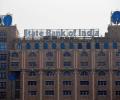
In order to boost its deposit base, State Bank of India (SBI) is focusing on various segments, including JanDhan account holders, trusts, societies, and the segment below the affluent class but above the normal account holders. According to Ashwini Tewari , managing director, SBI, the bank is focusing on three broad segments. One is wealth banking, where the bank is focusing on individuals who perhaps do not qualify for private banking but are above regular accounts and require individual attention.

During the first eight months of CY24, 50 IPOs mobilised Rs 53,453 crore.

'We do not believe in fire sale. We don't do it.'

The greater the post-listing gains, the higher the number of investors looking to sell.

'There has been a change in the advances mix, with the share of corporate loans decreasing.'
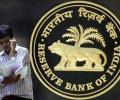
The Reserve Bank of India (RBI) has recognised the Fintech Association for Consumer Empowerment (FACE) as a self-regulatory organisation (SRO) in the fintech sector, the central bank announced on Wednesday. The banking regulator received three applications for fintech SRO. Of the remaining two applications, one has been returned by the RBI with a provision for resubmission after meeting specific requirements, while the third application is still under examination, said Governor Shaktikanta Das at the Global Fintech Fest in Mumbai.

The Reserve Bank of India (RBI) will launch the Unified Lending Interface (ULI) nationwide in due course, aiming to transform India's lending sector, similar to how the Unified Payments Interface (UPI) revolutionised the payments ecosystem, Governor Shaktikanta Das said on Monday.

Overseas Indians deposited around $4 billion in non-resident Indian (NRI) deposit schemes in April - June FY25, up 79 per cent over the amount deposited in these schemes in the same period last year, data released by the Reserve Bank of India (RBI) on Monday showed. In April - June FY25, inflows into the NRI schemes stood at $3.95 billion, compared to $2.21 billion during the same period a year ago. With this, the total outstanding NRI deposits as of June stood at $155.71 billion.

The Indian equity markets will soon account for over a fifth of a key emerging market (EM) benchmark tracked by funds with assets exceeding $500 billion. This development is expected to funnel as much as $3 billion into the domestic markets. Following the latest review undertaken by global index provider MSCI, India's weighting in the MSCI EM index will surpass 20 per cent for the first time, narrowing its gap with the current top-weighted China to fewer than 400 basis points.

Private banks' net profit grew 26.3 per cent year-on-year (Y-o-Y) to Rs 48,982 crore in the first quarter ended June 2024 (Q1FY25) owing to healthy growth in credit and other income. The gross non-performing assets (GNPAs) increased with the end of dispensation granted during the pandemic, according to the data compiled by BS Research Bureau for listed 18 private banks.

The Reserve Bank of India (RBI) on Wednesday issued a draft framework for alternative authentication mechanism for digital payments, wherein it has mandated that all digital payment transactions would have to be authenticated with an additional factor of authentication (AFA), except small value contactless card payments for up to Rs 5,000 at point of sale terminals, e-mandates for recurring transactions, and small value digital payments through offline mode, among others. Additionally, it has said that all digital payment transactions, other than card present transactions, have to ensure that one of the factors of authentication is dynamically created, i.e., the factor is generated after initiation of payment; is specific to the transaction; and cannot be reused.

The Softbank-backed company has set a price band of Rs 72 to Rs 76 per share for the maiden share sale and is expected to test the appetite for new-age loss-making companies.

Over 70 per cent of individual investors who engage in intraday trading incurred an average loss of Rs 5,371 during 2022-23 (FY23), according to a study conducted by the Securities and Exchange Board of India (Sebi). Intraday trades involve buying and selling securities within the same trading day. The study covered nearly 7 million investors trading in the equity cash segment.

Overseas fundraising by Indian firms is experiencing a robust revival in 2024, following a lacklustre 2023. This resurgence is primarily driven by strong demand for high-yield bonds from international investors amid improving liquidity conditions and reduced hedging costs. Indian companies raised ~32,619 crore through overseas bonds in the first half of 2024, surpassing the total amount raised via such instruments in the entire 2023, which stood at ~31,218 crore, according to PRIME Database. In comparison, ~45,237 crore was raised in 2022 and ~1.05 trillion was secured in 2021.

About two-thirds of the incremental net income of the Nifty 50 over FY19-24 has come from companies in relatively low-valued sectors such as banks, diversified financials, IT services, and metals and mining.

The fee pocketed by investment banks for handling equity share sales stood at $244 million during the first half of calendar year 2024. This was the highest first half figure since 2007, according to LSEG Data & Analytics, a provider of financial markets data. Capital mobilised via equity capital market (ECM) activity jumped 2.5 times to $29.5 billion - the highest-ever semi-annual total in terms of proceeds.

Public-sector banks, including Canara Bank and Bank of India, are tapping the infrastructure bond market. Canara Bank on Tuesday raised Rs 10,000 crore at a coupon rate of 7.40 per cent through 10-year infrastructure bonds. This comes after SBI on July 10 raised Rs 10,000 crore also through infrastructure bonds with a 15-year tenor at a coupon rate of 7.36 per cent.

Major credit issuers, including the largest - HDFC Bank - have integrated their systems with the Bharat Bill Payment Systems (BBPS) for receiving credit card repayments via third-party applications.
 © 2026 Rediff.com - Advertise with us - Disclaimer - Privacy Policy - Sitemap - Feedback - About us - Terms of use - Grievances